If your headlights flicker at idle, the charging system may be struggling to keep the lights supplied at lower engine speed. A weak battery, an alternator or belt problem, or a poor electrical connection can all contribute. For Bonita Springs drivers, the useful question is whether the flicker follows engine speed and electrical load, or stays with just one lamp.
The pattern gives the shop a place to start. If both headlights and the dashboard pulse together, the shop will look at power supply and shared connections. If only one headlight flickers, its bulb, connector, or wiring deserves closer attention. Neither observation proves a part has failed; testing decides the repair.
Why can the headlights flicker when the engine is idling?
The alternator supplies electrical power while the engine runs. At idle, it turns more slowly and may produce less power than it does at a higher engine speed. The battery helps cover the difference when electrical demand rises. According to AAA, a weak battery can let the headlights dim at idle when it cannot make up that difference.
A noticeable, repeating flicker has several possible causes. An alternator may not deliver steady output under load. A worn or loose drive belt can let it charge irregularly. A loose or corroded battery connection, damaged cable, or poor ground can interrupt the path between the charging system and the lights. DENSO lists these among the conditions a technician checks in charging-system diagnosis. The symptom alone cannot justify replacing the alternator.
Electrical load offers another clue. If the lights change when you turn on the blower or rear defogger, tell the shop which accessory was switched on and whether the engine was idling at the time. The change does not identify a failed part by itself, but it helps reproduce the complaint during testing.
Pay attention to whether the change is a brief dip as a load switches on or a continuing pulse while that load stays on. Also note whether the idle itself sounds uneven at the same moment. Those details help the technician compare the lighting symptom with what the engine and charging system are doing under the same conditions.
Which details help narrow down car lights flickering?
You do not need a meter to make useful observations. Note what happens under the same safe, parked conditions, and share these details:
- Which lights change? Both headlights plus the dash or cabin lights suggest a shared supply or ground issue. One headlight changing by itself points more toward that lamp or its circuit. These are starting points, not diagnoses.
- Does it happen only at idle? If the lights steady when engine speed rises, the charging system’s behavior at low speed is worth checking. If they flicker at other engine speeds too, mention that.
- Do accessories affect it? Note whether the blower, rear defogger, or another electrical load makes the flicker easier to see. A shop can repeat that condition.
- Is the battery-shaped warning light on? That lamp generally points to a charging-system concern, which can involve the battery, alternator, wiring, or connections. Report when it appears rather than assuming the battery needs replacement.
- Has starting changed? Slower-than-usual cranking can accompany a weak battery or poor battery connection. If the engine cranks normally but is hard to start only after getting gas, that is a different symptom pattern worth describing separately.
A short description such as “both headlights and the dash pulse when the blower is on at idle, then steady when I raise engine speed” gives a technician a test condition to repeat. If one headlight alone flickers, say which side. Note whether the other lights remained steady.
How does a shop check the charging and electrical system?
Lextech Automotive’s listed services include electrical diagnosis, headlight wiring repair, and starting, charging, and battery work. Diagnosis starts by reproducing what you observed. The technician checks the lights at idle, then sees whether engine speed or an added electrical load changes the symptom. DENSO recommends gathering the customer’s observations and duplicating the conditions that produced the problem.
Next comes a visual inspection. The shop checks battery terminals and cables for loose, corroded, or damaged connections; checks relevant grounds and wiring; and examines the alternator drive belt for condition and proper tension. A slipping belt or poor connection can produce charging trouble even when the alternator itself is serviceable.
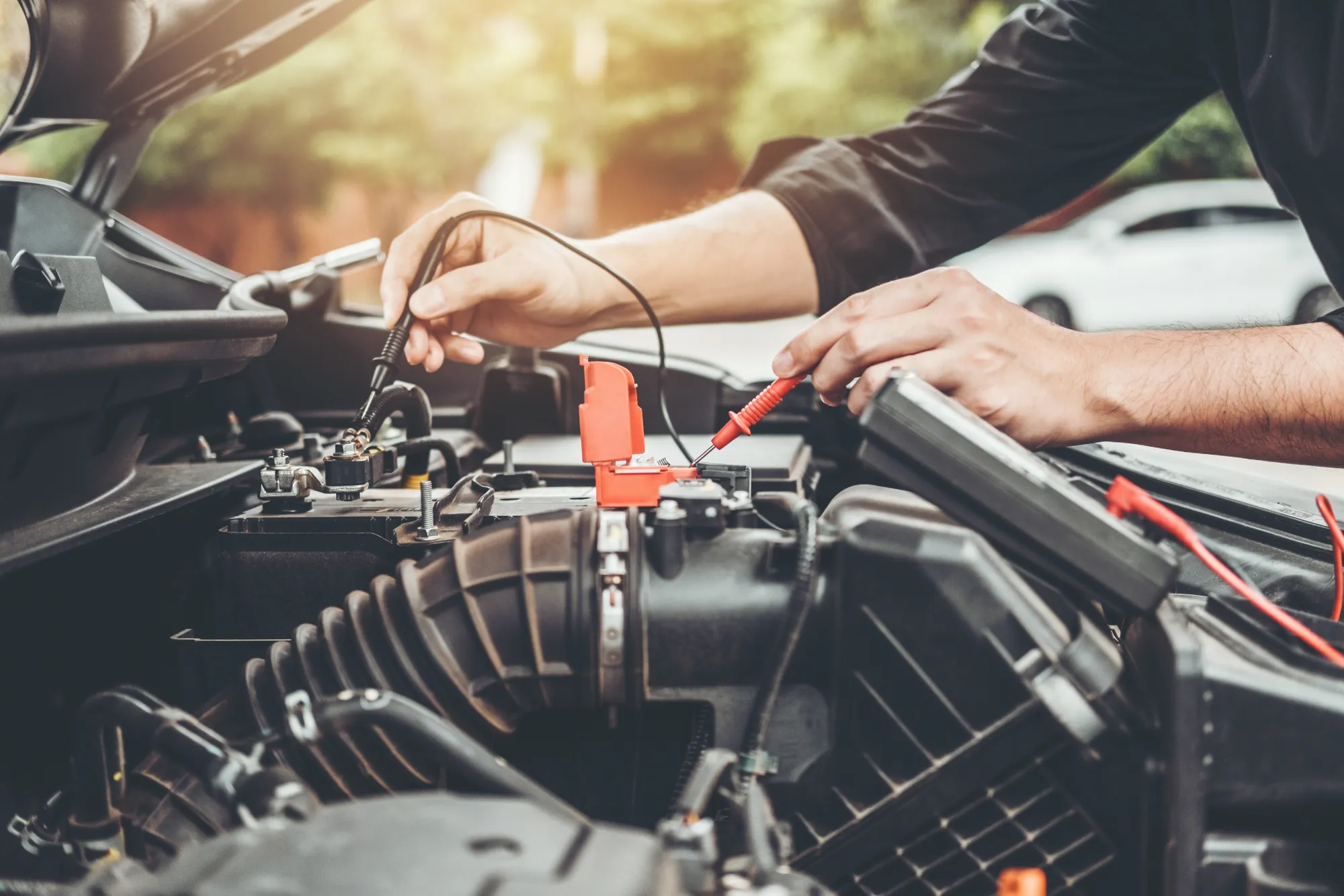
The battery is then tested for condition, rather than judged only by whether the engine started that morning. The technician checks charging output with the engine running, including when lights and other loads are on, and compares the readings with the vehicle maker’s specifications. DENSO’s test guidance also calls for checking the circuit’s positive and ground sides for voltage drop. That test helps reveal resistance in a cable or connection that a simple battery-voltage reading may miss.
The comparison matters: a battery can pass one check while a weak connection still limits power delivery, and a charging reading taken without the load that triggers the flicker may miss the complaint. Repeating the customer’s conditions lets the shop separate a general supply problem from a fault confined to one lighting circuit before recommending parts.
If the charging system tests correctly but one headlight still flickers, the investigation can move to that lamp’s bulb, connector, and wiring. If the symptom tracks engine speed or electrical load across several lights, the shop can focus on the shared charging or supply path. The order and exact tests depend on the vehicle and on what the initial checks show.
What might the test results mean for the repair?
The repair follows the fault found, rather than the symptom’s appearance. A weak battery, poor terminal connection, damaged wiring or ground, belt issue, and alternator problem call for different work. Some faults can occur together, so a battery test does not replace a charging-system check, and an alternator reading does not excuse a bad cable.
If your headlights flicker at idle, note which lights change, whether added loads affect them, and whether a warning light or slow crank appears. Ask the shop to check the battery, charging output, belt, and relevant connections before recommending a repair. For a current quote, contact Lextech Automotive with the vehicle details and the symptoms you observed.