A steering wheel not returning to center after a turn can point to binding steering or suspension parts, an alignment issue, or a steering-assist problem. For Bonita Springs drivers, the useful first step is to distinguish a wheel that physically catches from one that moves freely but needs extra guidance back toward straight ahead.
Those descriptions lead to different checks. A shop should inspect tire pressure and component movement, then assess alignment measurements before recommending repairs. The symptom alone does not establish that you need an alignment or a replacement steering assembly.
What can keep the steering wheel from returning?
Binding means something resists movement. The restriction could be in a suspension joint, steering linkage, or the steering mechanism. A technician needs to locate that resistance rather than assume the part closest to the steering wheel is responsible.
One documented example involves ball-joint installation. MOOG explains that contamination in the mounting socket can create an excessively tight fit and pressure within the joint, resulting in poor steering return. That makes recent repair history useful evidence, although it does not prove a new part was installed incorrectly. MOOG’s ball-joint installation guidance describes this condition as memory steer.
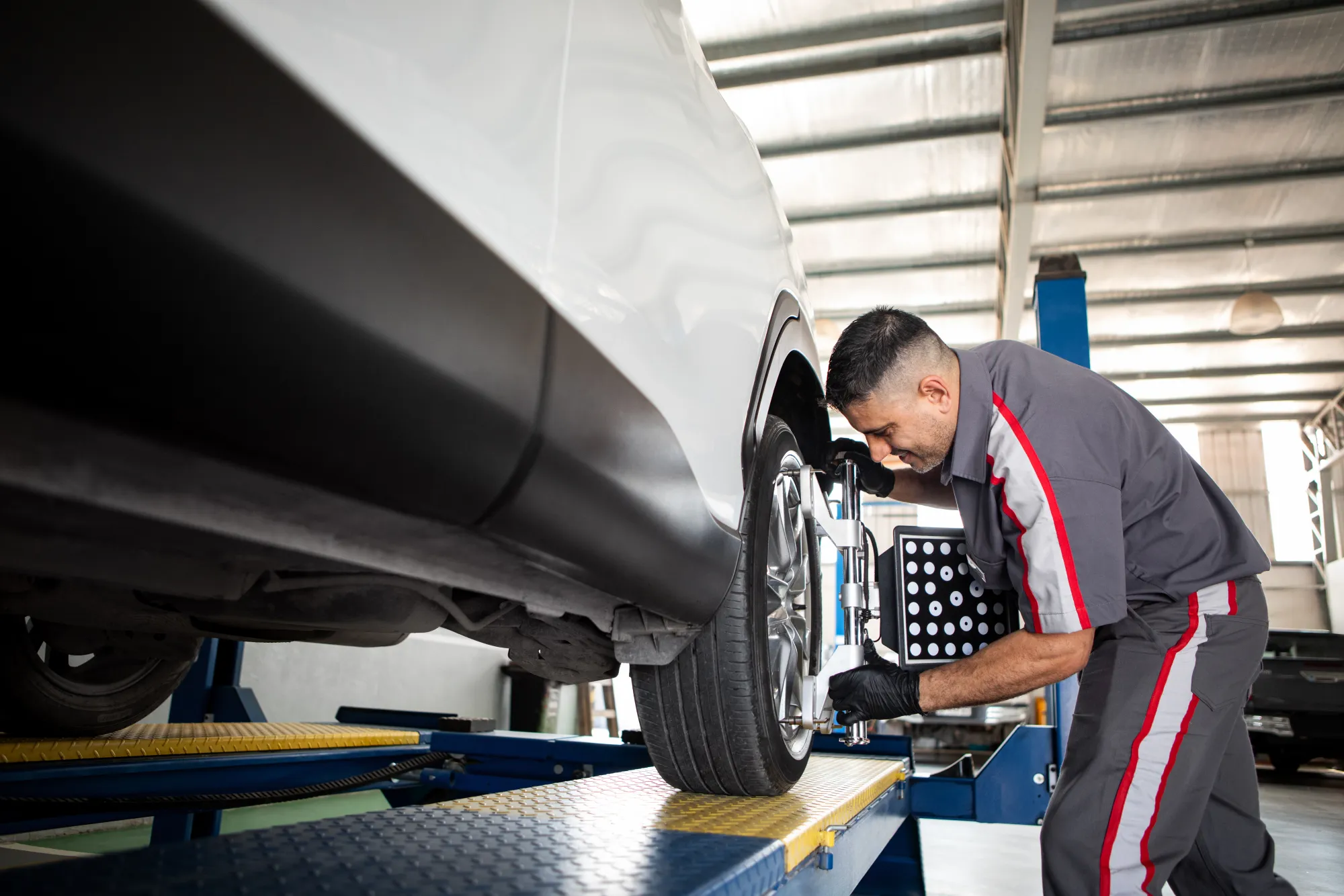
Alignment also belongs on the checklist. Caster is one of the alignment angles a technician should evaluate when investigating poor return. The technician should compare the readings with the vehicle’s specifications and explain how any difference relates to the complaint.
Steering assistance may need testing. If the wheel also feels unusually heavy, mention that separately. The diagnostic path should follow the steering system fitted to your vehicle; a hydraulic-system test is not a universal procedure.
Bendix’s commercial-vehicle troubleshooting guide checks pressure, alignment, binding, and hydraulic operation for non-recovery complaints. Its repair procedures are application-specific, but it illustrates why the symptom deserves several checks before a component is condemned. Bendix’s technical guide separates those possible causes.
What should you notice when the steering wheel sticks after turning?
Describe what you have already experienced during normal driving. Do not let go of the wheel to test it.
Helpful details include:
- Direction: Does it happen after left turns, right turns, or both?
- Feel: Does the wheel move smoothly, feel heavy throughout, or catch at a particular point?
- Position: Does it stay turned, or come back but settle slightly off-center?
- Timing: When did you first notice the change? Is it consistent or intermittent?
- Recent work: Did it begin after an alignment or steering, suspension, or tire work?
- Other observations: Were there noises or a steering warning light at the same time?
These are clues to guide inspection, not a way to identify a failed part from the driver’s seat. “It catches after right turns” is more useful than guessing which component needs replacing.
For example, you might report: “After a left turn, I have to guide the wheel back, but it moves smoothly.” Another useful description is: “It starts coming back, then catches and needs more effort.” Neither description proves the cause, but each tells the technician what behavior to try to reproduce. Say when you are unsure instead of estimating an angle or speed you did not notice.
Also distinguish poor return from an off-center wheel during straight travel. Tell the technician whether you are correcting resistance after a turn or simply holding the wheel at an angle to travel straight.
How does a shop check for binding before recommending repairs?
A useful inspection starts with your description and the vehicle’s service information. Ask the technician to explain how the checks address the particular movement you reported.
Start with the tires and recent work
Tire pressure belongs among the initial checks. For background on tire inflation, see Lextech’s article on nitrogen versus plain air.
If the symptom began after repairs, the inspection should revisit the affected area. Correct fit, installation, and freedom of movement deserve checking before assuming the replacement part itself is defective.
Locate the restriction
The technician should assess steering and suspension movement using the manufacturer’s procedure. Depending on the design, isolating connected components may be necessary to establish where resistance remains.
Ask what the inspection found: a joint that resists movement, interference, or resistance within the steering mechanism? A general statement that the front end feels tight leaves the repair recommendation unexplained.
If the shop recommends a steering assembly, ask how the inspection separated that assembly from the joints and linkage connected to it. If a suspension joint is suspected, ask what movement check identified it. You are looking for an explanation of where resistance was found, not instructions to disconnect anything yourself.
Compare alignment findings with the complaint
Ask to see the measurements and the applicable factory specifications, including the caster findings. If a reading is outside specification, ask what correction is appropriate for your vehicle.
If caster is outside the specified range, ask whether it is adjustable on your vehicle and what the shop recommends checking if it is not. That keeps the conversation tied to the actual readings.
An alignment recommendation should explain the measured issue. If inspection also finds binding, the repair plan should address that restriction rather than assume alignment adjustment will resolve it.
What should support a steering and suspension repair recommendation?
A clear recommendation connects the symptom to an identified restriction, a measured alignment issue, or a failed system test. Ask for a current quote based on those findings before authorizing repairs.
Useful questions are: What finding explains the sticking? Does the vehicle need a component repair, alignment correction, or further diagnosis? What will confirm that the original complaint has improved?
If the sticking was intermittent, ask whether the technician experienced it during diagnosis. If it could not be reproduced, discuss what was checked and what remains uncertain before approving a speculative replacement. After a correction, describe any remaining difference using the same observations you reported initially: direction, catching, heaviness, and where the wheel settles.
The repair plan should connect each recommended correction to the inspection findings and include a check of the original sticking or return complaint.