You bring your RAV4 Hybrid into a shop in Bonita Springs, the pads still have plenty of material left well past 90,000 miles, and you decide brakes are one line item you can stop worrying about. The first half of that is true. The second half is where hybrid owners here get caught out, because on these cars the pads are the last thing to go wrong.
Your hybrid slows itself mostly with its electric motor, so the friction brakes sit in reserve. Parts that sit in reserve do not wear out. They seize, they corrode, and they age on the calendar instead. A maintenance sheet built around pad thickness can pass every visit while the rest of the brake system quietly goes bad.
Why Your Hybrid Barely Uses Its Brake Pads
When you lift off the pedal or brake gently in a Toyota or Lexus hybrid, the drive motor flips roles and becomes a generator. The U.S. Department of Energy describes it plainly: regenerative braking recaptures energy that would normally be lost during coasting or braking, using the forward motion of the wheels to turn the motor, which generates electricity and helps slow the vehicle. The Department’s Alternative Fuels Data Center puts it the same way, noting that the generator makes electricity from the rotating wheels while braking and sends that energy back to the traction battery pack.
That is the whole trick behind hybrid fuel economy, and it is also why your pads look untouched. Every gentle stop in traffic on Bonita Beach Road, every roll up to a light on US-41, every bit of slowing on the I-75 ramp toward Estero is being handled largely by the motor. The friction brakes, meaning the pads and rotors you would recognize on any car, only get properly involved when you brake harder or come down to the last few miles per hour of a stop.
NAPA AUTOPRO sums up the practical effect: regenerative braking takes pressure off the brake parts and helps them last longer. Longer pad life is real, and it is one of the nicer things about owning a hybrid.
Regenerative Braking Brake Wear: Low Pad Wear Is Not a Healthy Brake System
On a conventional car, pad thickness is a decent proxy for brake health. The pads wear, and roughly in step with that wear the rotors get scrubbed clean by heat and friction, the caliper hardware keeps moving, and the whole assembly stays exercised. Our post on when to replace your brake pads walks through that normal case.
Your hybrid breaks that link. Take away most of the pad wear and you also take away the heat, the movement, and the self-cleaning that came with it. The interval sheet keeps saying the pads are fine because the pads are fine. Nothing on that sheet is measuring what actually went wrong.
That is the whole story of regenerative braking brake wear. The wear you can measure goes down, and the failures a pad gauge will never catch go up. Three things go wrong instead, and not one of them cares how thick your pads are: the rotor faces, the moving hardware, and the fluid.
The Rust Layer the Pads Never Scrub Off
A brake rotor is bare cast iron. It rusts. On any car parked outside in Southwest Florida, a light film of surface rust forms on the rotor faces overnight, and on a conventional car your first few stops of the morning wipe it straight off. You would never know it was there.
A hybrid does not reliably get those first few stops. Vehicle Service Pros, writing for the repair trade, makes the underlying point directly: because the brakes are not used as much to slow a hybrid, heat is not generated as quickly. Less heat and less pad contact means the film does not always get wiped off.
This is not the overnight film that vanishes by the end of your street. It is rust that never quite gets removed, and over enough months it stops being a film and becomes a layer.
What you feel from the driver’s seat:
- A groan, growl or grinding sound on the first stops of the day that fades as you drive
- Noise that comes back after the car has sat for a few days, then goes away again
- A faint shudder or pulse through the pedal on light braking
None of that means your pads are worn out. It usually means the surfaces the pads press against are no longer clean, and the answer is brake service to the rotors and hardware rather than a set of pads.
Caliper Slide Hardware and the Parking Brake Fail From Disuse
Here is the failure that catches hybrid owners out most often, and it has nothing to do with wear.
A disc brake caliper has to slide. Small pins and guide surfaces let it float sideways so the pads press evenly on both faces of the rotor and then release cleanly. That sliding hardware is greased at the factory, and it depends on regularly being used.
Vehicle Service Pros is blunt about what happens when it is not. On hybrids, the caliper slides can rust and corrode, causing the caliper to slide unevenly and creating irregular wear on the brake pads. The same source notes that binding calipers are common on these vehicles specifically because the brakes do not get exercised as much, so the calipers eventually bind, fail to release, and wear the pads.
The order of events matters. The hardware seizes first. The pad damage comes second, as a consequence. If you are watching pad thickness for a warning, you are watching the symptom rather than the cause. It is also the most common reason brake repair in Bonita Springs FL on a hybrid turns out to be a hardware job rather than a pad job.
The parking brake has the same problem for the same reason. Its mechanism is designed to be worked. Plenty of drivers here rarely touch it, and a mechanism that never moves in a humid garage can gradually stop wanting to move at all. Then one day it does not want to let go.
Brake Fluid Ages on the Calendar, Not the Pedal
Your brake fluid does not care how gently you drive. It ages on a clock.
Brake fluid is hygroscopic, which is a technical way of saying it pulls moisture out of the air. As a Toyota dealer service department explains it, the fluid attracts moisture from the air, which can seep past seals and through microscopic pores. As the fluid takes on water its boiling point drops, and water sitting in the system can cause internal corrosion in the master cylinder, calipers, brake lines and other components.
The federal safety standard for brake fluids gives you a sense of how much difference that water makes. FMVSS 116 sets a minimum dry boiling point of 401 degrees Fahrenheit for DOT 3 fluid and 446 degrees for DOT 4. The minimum wet boiling points those same fluids have to meet are far lower: 284 degrees for DOT 3 and 311 degrees for DOT 4. The wet figure is measured after the fluid has been deliberately humidified to a water content of 3.70 percent by weight.
Be careful what you take from that, though. It shows water changes how brake fluid behaves, not how long your own car takes to get there. For that, go to the interval in your maintenance guide, and if your factory-scheduled visits have already run out, our post on how a Bonita Springs shop picks up the factory maintenance schedule covers where that leaves you. The Toyota dealer source above states that Toyota recommends changing brake fluid every two years or 20,000 miles, while noting that several factors can affect the interval.
The mileage half of that pairing is the trap for hybrid owners. If you look at 20,000 miles and think your fluid is fine because you are a light-footed commuter between Bonita Springs and Naples, you have read half the recommendation. The two-year half runs whether you drive or not, and moisture is exactly the thing this climate has in abundance. It is the same lesson as reading a mileage sticker against a time-based schedule, which we got into in our post on reading oil life against the sticker on your windshield.
Why Southwest Florida Makes All of This Worse
Corrosion needs moisture and time. Here on the Lee and Collier county coast we have a generous supply of both.
The Fort Myers area, the nearest long-record weather station to Bonita Springs, averages 53.3 inches of rain a year spread across roughly 132 rainy days. Average monthly relative humidity never drops below about 69 percent, and it peaks near 79 percent in August, with July and September close behind at about 78 percent. June through September is by far the wettest stretch of the year.
Notice what is missing from that list: road salt. Most of what is written about brake corrosion assumes salted winter roads and freeze-thaw cycles, and none of that applies anywhere from Naples up to Fort Myers. Humidity in the seventies for months on end, working on iron parts that a hybrid rarely heats up, does the job on its own and does it year round.
Then there is the seasonal pattern. A snowbird who parks a Lexus RX hybrid in Bonita Beach in May and comes back in October has left it sitting through the four wettest, most humid months on the calendar, with the caliper hardware motionless and the parking brake set the whole time. Those cars often come back with a groan on the first few stops and a parking brake that is reluctant to release. That is not neglect and not a defect. It is what these conditions do to a brake system that was already being used lightly, and it is why a request for Lexus brake service in Bonita Springs so often arrives in the first week a seasonal car is back on the road.
What Hybrid Brake Service in Bonita Springs Actually Involves
NAPA AUTOPRO describes a proper hybrid brake service in three parts, and it maps neatly onto the three problems above:
- Descaling, meaning cleaning away dust, rust and corrosion from the surfaces where it has built up
- Lubrication, applying fresh grease to the caliper sliders, brake shoe adjusters and other parts that have to move freely
- Bleeding, flushing out the old fluid along with any air and contaminants it has picked up
The same source recommends inspecting a hybrid’s brakes roughly twice a year, with once a year as the minimum. That is a time-based rhythm rather than a mileage one, which is the right shape for a problem driven by humidity and disuse.
The bleeding step is the reason this is genuinely a shop job rather than a driveway one. Vehicle Service Pros notes that servicing these systems requires disabling the ABS self-test function first and waiting five to ten minutes for the capacitors to bleed off, and that a scan tool is needed to bleed the system properly. A vacuum bleeder, the usual home-garage approach, is not recommended on a hybrid. The braking is managed electronically as it blends motor and friction braking, and the electronics have to be told what is happening.
Wondering what this runs? We are not going to guess at that in a blog post, because parts and labor pricing moves too fast for a number here to still be honest by the time you read it. Ask us for a current quote on your specific vehicle and we will give you a real one.
The Takeaway for Hybrid Owners in Bonita Springs
If you drive a hybrid, retire the habit of using pad thickness as your brake health check. Instead:
- Get the brakes inspected on a time schedule, not a mileage one, at least once a year
- Use the parking brake regularly so its mechanism keeps moving
- Check the time half of your brake fluid interval, not just the mileage half
Talk to LexTech Automotive About Your Hybrid’s Brakes
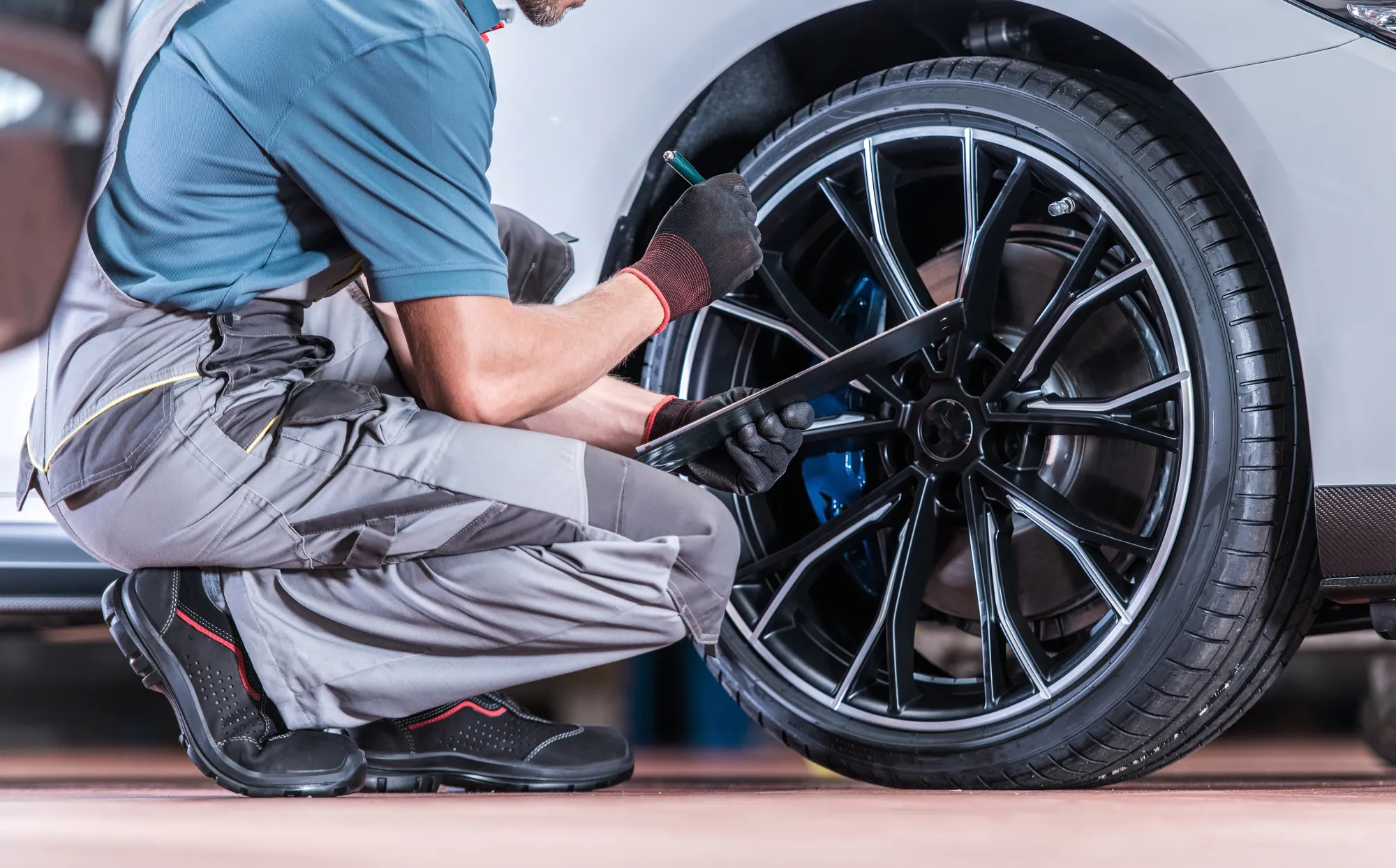
Toyota and Lexus are our specialty, and hybrids are a big share of what rolls through our bays here in Bonita Springs. That means we are not measuring your pads, shrugging, and sending you home. We pull the wheels, look at the rotor faces, clean and re-grease the slide hardware, work the parking brake, and check where your fluid actually stands on the calendar.
We look after drivers across Bonita Springs, Estero, Naples, Fort Myers and Bonita Beach, and we would rather find a sticking caliper on a Tuesday inspection than have you discover it on an I-75 off-ramp.
Schedule an appointment and let us give your hybrid’s brakes the kind of look that pad thickness alone will never give you.